Xinhua
03 Sep 2025, 12:45 GMT+10
The SCO is therefore more than a regional grouping. It is a living expression of multipolarity, convening Eurasia's great powers, managing differences and articulating a collective vision beyond Western-led alliances.
by Maya Majueran
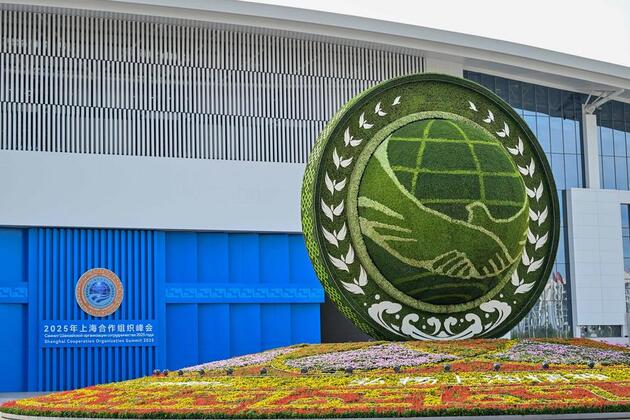
The tectonic plates of global power are shifting. For centuries, the international order was dictated from the West, first by European capitals and later by Washington. Today, that era is drawing to a close, and the epicenter of economic, political and strategic gravity is moving. Against this backdrop of epic transformation stands the Shanghai Cooperation Organization (SCO), which both symbolizes and boosts the unity and prosperity of Eurasia.
What makes the SCO remarkable is its composition. Unlike homogenous Western-led alliances such as NATO or the G7, its strength lies in its ability to unite both rivals and partners under one roof. Far from being a weakness, this reflects profound strategic pragmatism. The SCO provides an indispensable platform for continuous dialogue, creating channels that help manage disputes and address differences without the interference of third-party mediation. This ensures that Eurasian solutions are crafted for Eurasian problems, serving regional interests first.
The SCO's scale is staggering. It spans over 60 percent of Eurasia's landmass and encompasses more than 40 percent of the world's population. Its member states, covering China, India, Russia, Pakistan and key Central Asian countries, representing a unique concentration of future economic growth, vast energy reserves, historic and modern trade routes and formidable military capabilities. Its reach is growing as well. The accession of Iran and Belarus in recent years and the interest of countries such as Trkiye and some Gulf states, participating as partners, underscore the SCO's magnetic pull. Increasingly, it has become the preferred hub for cross-regional diplomacy that functions outside traditional Western circuits.
Founded in 2001 with an initial focus on border security and confidence-building, the SCO has swiftly evolved into a strategic counterweight. Its foundational principles of non-interference, respect for sovereignty and advocacy for a multipolar world stand in sharp contrast to the interventionist tendencies often associated with Western institutions. This vision resonates with a global audience weary of perceived Western hegemony and unilateralism.
In practice, the SCO translates these principles into action: joint counterterrorism exercises, coordinated intelligence sharing, energy partnerships and most crucially, the financing and construction of connectivity projects binding the continent together. Initiatives like the China-proposed Belt and Road Initiative (BRI) find a natural home within the SCO's framework, weaving a dense network of roads, railways, pipelines and digital corridors across Eurasia.
At its core, the SCO represents the reassertion of Eurasian agency. This is a story of decolonization, politically, economically and strategically. After centuries of having their fates dictated by external powers, the nations of Eurasia are now building the political scaffolding to act collectively. The SCO gives them space to set their own security and development agendas, free from external prescriptions or conditionalities. For many in the Global South, the SCO and BRICS are not just alternatives; they are the future of global governance. They provide mechanisms to rebalance a system long tilted in favor of a few, ensuring that nations, regardless of size or historical alignment, have a voice in shaping the international norms of the new era.
The combined strengths of these rising powers' youthful populations, booming markets, control of critical natural resources and rapid technological adoption are making them increasingly less dependent on the West. In a dramatic reversal of the 20th-century dynamics, it is now often the West that seeks access to the Global South's markets, resources and strategic partnerships to meet global challenges.
This new reality demands a fundamental reassessment in Western capitals. The age of unipolar dominance is over. Clinging to outdated hierarchies and Cold War-era alliances will only accelerate the West's relative decline. Global stability now depends on adaptive engagement with emerging institutions like the SCO. That requires moving beyond containment towards collaboration on shared challenges from climate change to nuclear proliferation to economic volatility.
Whether or not the West embraces this path, the trajectory is clear. The SCO and the broader Global South are already laying the foundations of a new paradigm of global development -- one driven by intra-South trade, investment and technological collaboration. No single hegemonic power can halt this momentum.
The SCO is therefore more than a regional grouping. It is a living expression of multipolarity, convening Eurasia's great powers, managing differences and articulating a collective vision beyond Western-led alliances. It reflects the undeniable geopolitical reality of our time: the long-term, irreversible rise of Eurasia as the defining actor in 21st-century world affairs. The train has left the station, and it is heading east.
Editor's note: Maya Majueran currently serves as the director of Belt Road Initiative Sri Lanka, an independent and pioneering organization with strong expertise in Belt and Road Initiative advice and support.
The views expressed in this article are those of the author and do not necessarily reflect those of Xinhua News Agency.
Get a daily dose of Chile Sun news through our daily email, its complimentary and keeps you fully up to date with world and business news as well.
Publish news of your business, community or sports group, personnel appointments, major event and more by submitting a news release to Chile Sun.
More InformationNew Delhi [India], September 3 (ANI): Ahead of the COP 30 Climate Change Conference, which is going to be held in Belem, Brazil, from...
Washington, DC [US], September 3 (ANI): The United States killed 11 people in a deadly military strike against an alleged drug boat...
(Photo credit: Robert Hanashiro-Imagn Images) Bold is the theme on defense for the Kansas City Chiefs as the 2025 season begins in...
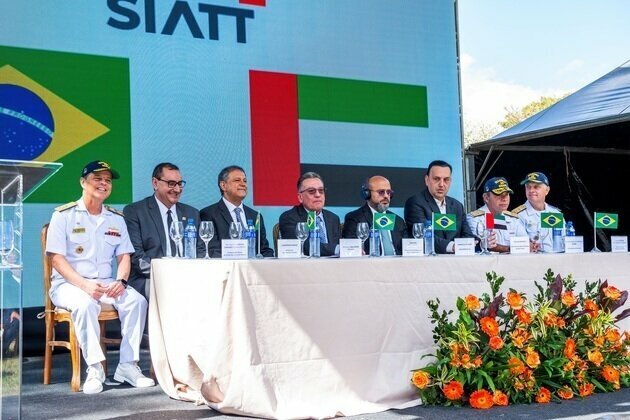
SAO JOSE DOS CAMPOS, 2nd September, 2025 (WAM) - - EDGE Group entity SIATT, a Brazil based company specialising in the development...
By Kaushal Verma New Delhi [India], September 2 (ANI): Andre Aranha Correa do Lago, President of the UN's COP30 Climate Change Conference,...
Buenos Aires [Argentina], September 2 (ANI): Former Argentina international goalkeeper Franco Armani, the World Cup-winning footballer...
Balochistan [ Pakistan] 3 Sep (ANI): A young man has reportedly gone missing after being detained by Pakistani security forces in Turbat,...
The president said the troops sent by Kim Jong-un to Kursk Region demonstrated courage and heroism Russian President Vladimir Putin...
Moscow [Russia], September 3 (ANI): Russian President Vladimir Putin described the relationship between Russia and China as being at...
New Delhi [India], September 3 (ANI): Congress MP Manickam Tagore on Wednesday took a swipe at Prime Minister Narendra Modi's recent...
New Delhi [India], September 3 (ANI): Former Indian Cricketer Madan Lal backs the Indian team as favourites in the upcoming Asia Cup...
The SCO is therefore more than a regional grouping. It is a living expression of multipolarity, convening Eurasia's great powers, managing...