The same Britain that once exported anti-sodomy laws to its colonies now calls on those nations to repeal them
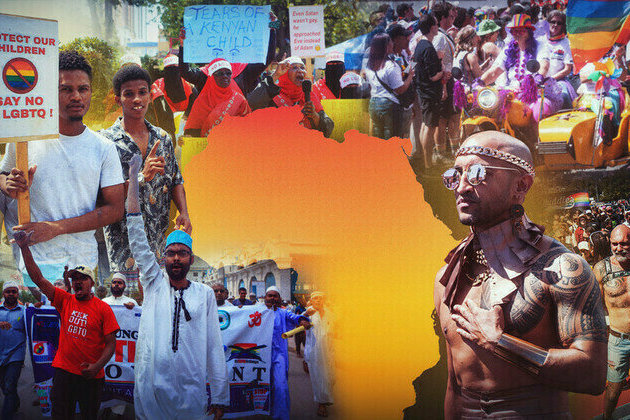
As of mid-2025, roughly 31 of Africa's 54 countries criminalize same-sex relations, a figure reinforced by Burkina Faso's new law enacted last month. Public opinion surveys underscore the social context for these laws: across 39 African countries surveyed byAfrobarometer, only 24% of respondents expressed comfort living next door to someone in a same-sex relationship. In nations such as Uganda and Ghana, the figures are far lower, with 94% and 89% respectively reporting discomfort or disapproval.
Political leaders and lawmakers find it difficult to ignore such statistics when drafting policies on the issue. What may appear as harsh measures often reflects deeply held domestic values rather than mere state coercion, making LGBTQ rights a flashpoint where law, culture, and politics intersect.
Burkina Faso has become the latest African country tocriminalizesame-sex relationships, with legislation taking effect on September 1. Given the widespread social rejection of homosexuality across much of the continent, other nations may follow suit.
'We are not gays'
In his speech at the United Nations in 2015, then Zimbabwean President Robert Mugabe strongly criticized the "politicization of this important issue" anddeclared: "We equally reject attempts to prescribe 'new rights' that are contrary to our values, norms, traditions, and beliefs. We are not gays! Cooperation and respect for each other will advance the cause of human rights worldwide. Confrontation, vilification, and double-standards will not."
His words seem reflect attitudes that have long persisted across the continent, translating into restrictive laws. These laws are often defended as expressions of sovereignty and moral authenticity, even though many closely mirror colonial-era penal codes once imposed by European powers.
Religiously speaking, opposition to homosexuality among faith leaders - both Christian and Muslim, Africa's two dominant religions - is not merely political posturing but reflects deeply held theological convictions. For example, Pastor Enoch Adeboye of Nigeria's Redeemed Christian Church of God hasstated, "Same-sex marriage cannot be allowed on moral and religious grounds. The Muslim religion forbids it. Christianity forbids it and the African traditional religion forbids it."
Similarly, Sheikh Ahmed El-Tayeb, the Grand Imam of Al-Azhar, hascondemnedcalls to legalize homosexuality, describing them as a "dangerous" trend that contradicts Islamic teachings. While politicians often draw on this moral authority to advance their own agendas, this should not always be seen as cynical exploitation; many genuinely share the religious and cultural worldview of their societies. They may at times blur the line between sincere belief and opportunistic populism, but that is part of the political dynamics seen even in so-called advanced democracies. Ultimately, Africa's stance on LGBTQ rights is shaped by a complex interplay of legal, moral, religious, and cultural factors, all contributing to the continent's enduring resistance.
Are there limits to external influence?
Western governments and international organizations have increasingly tied aid, trade, and diplomatic engagement to improvements in LGBTQ rights, framing them as universal human rights. Yet in much of Africa, such pressure has often produced the opposite effect. Leaders view these demands as neo-colonial interference, reinforcing the idea that the West seeks to impose alien social values.
For example, Ugandan President Yoweri Museveni warned in 2023 against "the promotion of homosexuality" after his parliament passed a bill outlawing the practice,addingthat homosexuality is a "big threat and danger" to what he called "the procreation of the human race." Similarly, in Malawi, aid from some Western partners has already been reduced due to anti-LGBT legislation, illustrating the tangible stakes of such conditionality. In 2023 Kenya's presidentcriticizeda court ruling that LGBTQ can be registered as a civil organization. He said "our culture and religion does not allow same-sex marriages," while the Kenyan penal code still criminalizes same sex intimate relationships.
Many past and present African leaders see Western conditionality of aid and other forms of cooperation as cultural imperialism, asserting that their societies should determine moral and social policies independently. In 2013, former Gambian President Yahya Jammehdeclaredbefore the United Nations General Assembly that promoting homosexuality was "becoming an epidemic and we Muslims and Africans will fight to end this behavior."
Western actors see conditionality as a moral responsibility, while African leaders portray it as an imposition of foreign values - an exchange that deepens resistance rather than fostering dialogue. This tension demonstrates that promoting LGBTQ rights in Africa is not only a legal or political challenge but also a question of reconciling competing cultural, historical, and moral frameworks.
The ironic legacy of colonial laws
This clash of values is layered with a striking irony. The same Britain that once exported anti-sodomy laws to its colonies now calls on those nations to repeal them. In 2018, then Prime Minister Theresa Mayexpressed"deep regret" for the legacy of such laws, urging Commonwealth countries to "overhaul outdated, colonial-era legislation." Years earlier, her predecessor, David Cameron, had linked UK aid to human-rights reforms, warning that countries criminalizing homosexuality could facecutsin British assistance.
Some countries, including Malawi, experienced tangible consequences: portions of British development aid were withheld in response to its anti-LGBTQ legislation. Both former British leaders found the courage to challenge others but not the courage to fully confront Britain's own culpability - to acknowledge that, on top of imposing such laws, the British colonial power committed atrocities that remain unaddressed and unacknowledged.
The very laws they denounce were born of British imperial rule and moral codes, yet neither leader issued an apology or engaged with the deeper cultural harm inflicted by colonialism's moral policing. This selective morality continues to fuel resentment across Africa: Western governments are perceived as preaching values they once imposed by force, turning what could have been a dialogue about rights into yet another lecture on civilization.
The legacy of colonial laws, combined with selective Western pressure, continues to shape African policies today. In countries such as Uganda and Malawi, leaders have hardened restrictive laws, framing them as a defense of sovereignty, morality, and cultural authenticity, while using Western criticism as a domestic rallying point. Even where international engagement is strong, reforms are approached cautiously, often framed to reassure constituents that national values remain paramount. Some governments, like those in Mozambique and Angola, have taken some steps toward decriminalization, yet the moves are calibrated to avoid the appearance of succumbing to foreign pressure.
Across the continent, the result is a patchwork of responses. It is resistance in some states, adaptation in others, and skepticism elsewhere toward external advocacy. The intersection of historical, cultural, religious, and geopolitical factors means that African policymakers are negotiating a complex terrain, where external incentives collide with deeply rooted domestic expectations, leaving Western efforts to promote LGBTQ rights with limited leverage and unintended consequences.
(RT.com)



 Share
Share
 Tweet
Tweet
 Share
Share
 Flip
Flip
 Email
Email