


Hard times create strong women: Inside the rise of female entrepreneurs in Afghanistan
RT.com
10 Nov 2025, 21:43 GMT+10
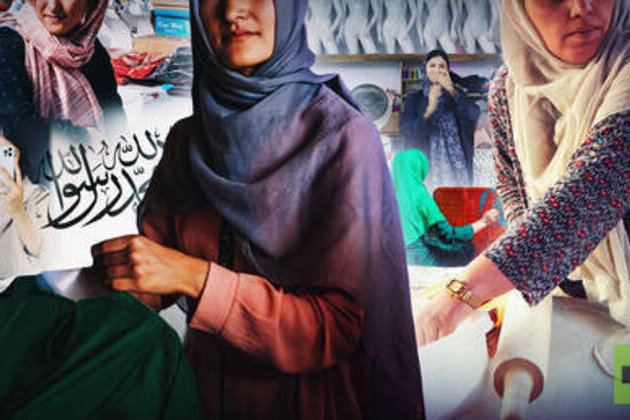
Street vendors, tailors, and young designers are reshaping everyday life, balancing faith, family, and survival
"Hard times create strong men," goes the saying attributed to G. Michael Hopf. Strong women, too - and Afghan women are a remarkable example of that strength.
Since 2021, the Islamic Emirate has placed limits on women's employment. Women are banned from government positions, from domestic and international NGOs, and from administrative jobs - for example, a decree issued in December 2024 ordered that female university staff be replaced by their male relatives. In some provinces, women are not allowed to come to work unless accompanied by a male guardian - a husband, father, brother, or son.
According to Taliban officials, these prohibitions are based on religious principles and meant to protect women's dignity. A few years ago, Mohammad Sadiq Akif, spokesman for the Taliban's Ministry of Vice and Virtue, told the Associated Press that a woman "loses her value" if strangers look at her uncovered face - a kind of logic that may be hard for non-religious people to understand.
Still, many women continue finding ways to earn a living within the strict framework of bans, cultural norms, and Islamic values. Starting a business of their own is often the best way to keep that delicate balance.
How bans became business opportunities
The sizzling sound of oil fills the air as Nargees flips a golden-brown 'bolani' - a thin flatbread stuffed with mashed potatoes - over the frying pan.Her hands move fast and sure: roll the dough, spread the filling, crimp the edge, place it on the hot pan. Within seconds, another one joins the pile.
"The number of customers depends on my mood," she says. "When I'm down, no one comes. When I'm happy - there's a crowd."
At 40, Nargees is a mother of five and once worked as a health educator at Kabul's Malalai Maternity Hospital. She used to visit poor neighborhoods to teach women about hygiene and family planning. After the Taliban returned to power, that job quietly ended - not because she was banned, but because the women she was supposed to meet no longer felt safe leaving their homes.
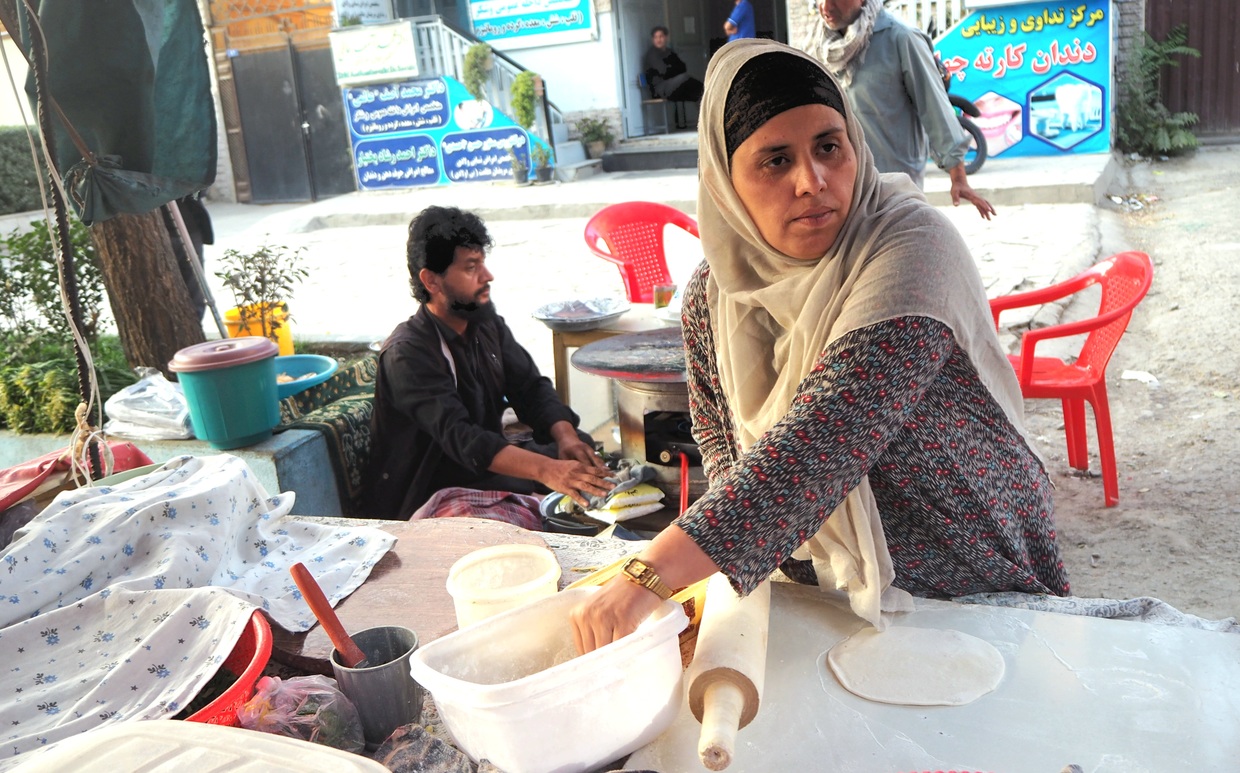
Nargees had always been the family's main breadwinner: her husband's health prevents him from working, and her sons are still too young. So she didn't wait for anyone's permission. She rented a cart, set up a frying pan, and began selling bolani on the street.
The small business turned out to be good enough to keep the family afloat - and, as she puts it, to keep her calm.
"I know roughly how much I can earn and what my tomorrow looks like," she says, pouring more oil into the pan. "That's comforting. When I'm calm, my children are calm too. I have to be their example."
A little girl in a dirty pink jacket tugs at her sleeve, asking for money. One of the many street children scattered across Kabul. Nargees shakes her head.
"This is what happens when parents stop caring," she says quietly. "I work so my children never end up like that."
Across the street, another bolani vendor, Humaira, is rolling dough at her own cart. In her late forties, she used to teach the Quran at a girls' high school before it closed four years ago. Now she's known in the neighborhood as "Auntie Potato."
"Sometimes they tell me to cover my hair," she explains. "Nobody cares about the face. So now I wear this." She lifts her headscarf to show a gray hijab cap underneath, smiling as she turns back to the frying pan.
Working within the system - and making it work
Street vendors like Nargees and Humaira are part of a quiet shift happening across Afghanistan. Since 2021, women have been finding new ways to work within the country's changing rules - not in protest, but in adaptation.
And, no matter how unbelievable it may sound to a Western audience, the government actually supports these initiatives. The Afghanistan Women's Chamber of Commerce and Industry (AWCCI), established in 2017, is still active and expanding - with local branches now operating in 20 out of 34 provinces.
The chamber issues licenses, provides training both in person and online, organizes exhibitions, and supports regional markets. Salma Yousufzai, the CEO of AWCCI, said the total number of female entrepreneurs exceeded 100,000 in 2023. Not all of them have licenses, but small businesses like Nargees's food cart don't require any paperwork.
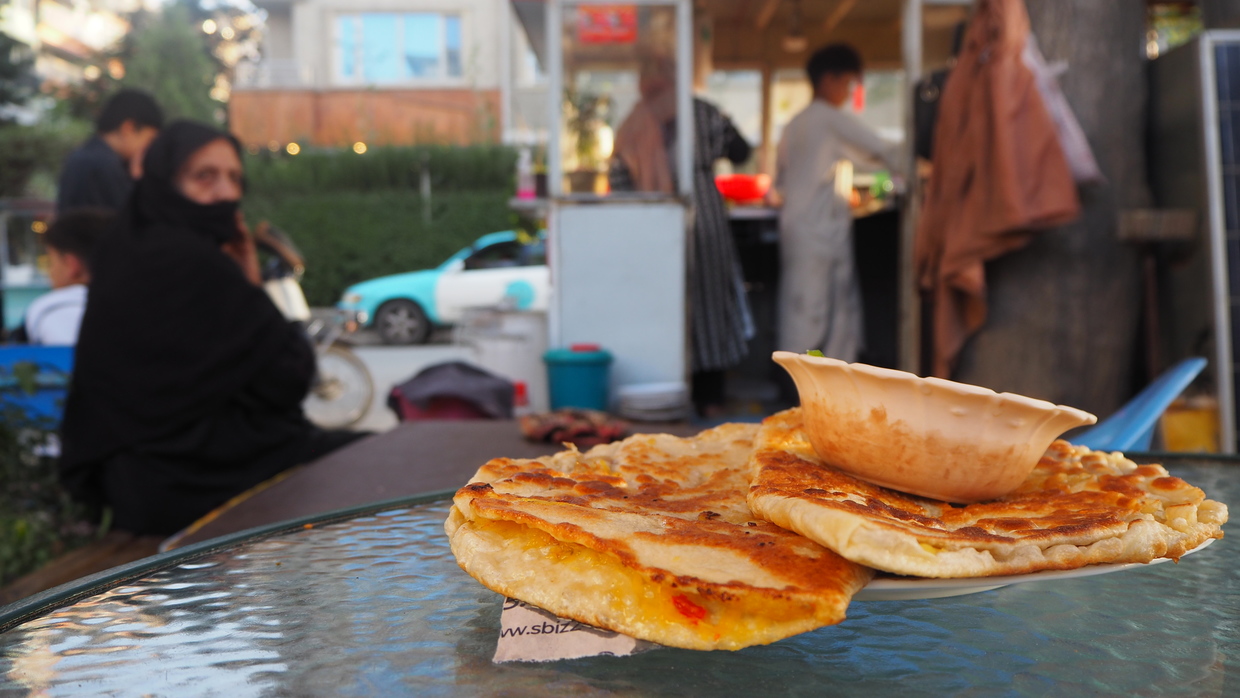
One of the best-known examples of a female-owned enterprise is 'Banowan-e Afghan' ("Afghan Ladies" in Dari), a restaurant launched in 2023 by businesswoman and mother of three, Samira Mohammadi. The place served traditional Afghan food and catered only to women, while male customers - including some Talibs - could order takeout.
Mohammadi tried to provide jobs for women from vulnerable backgrounds; as she mentioned in an interview, even beggars would come in from the street asking for work, drawn by the daily pay of 100 afghanis. Banowan-e Afghan thrived and soon opened a second branch. During the ribbon-cutting ceremony, the owner thanked the Taliban government for its support and cooperation.
Work, risk, repeat
Behind every business, there is a story of loss and acceptance.
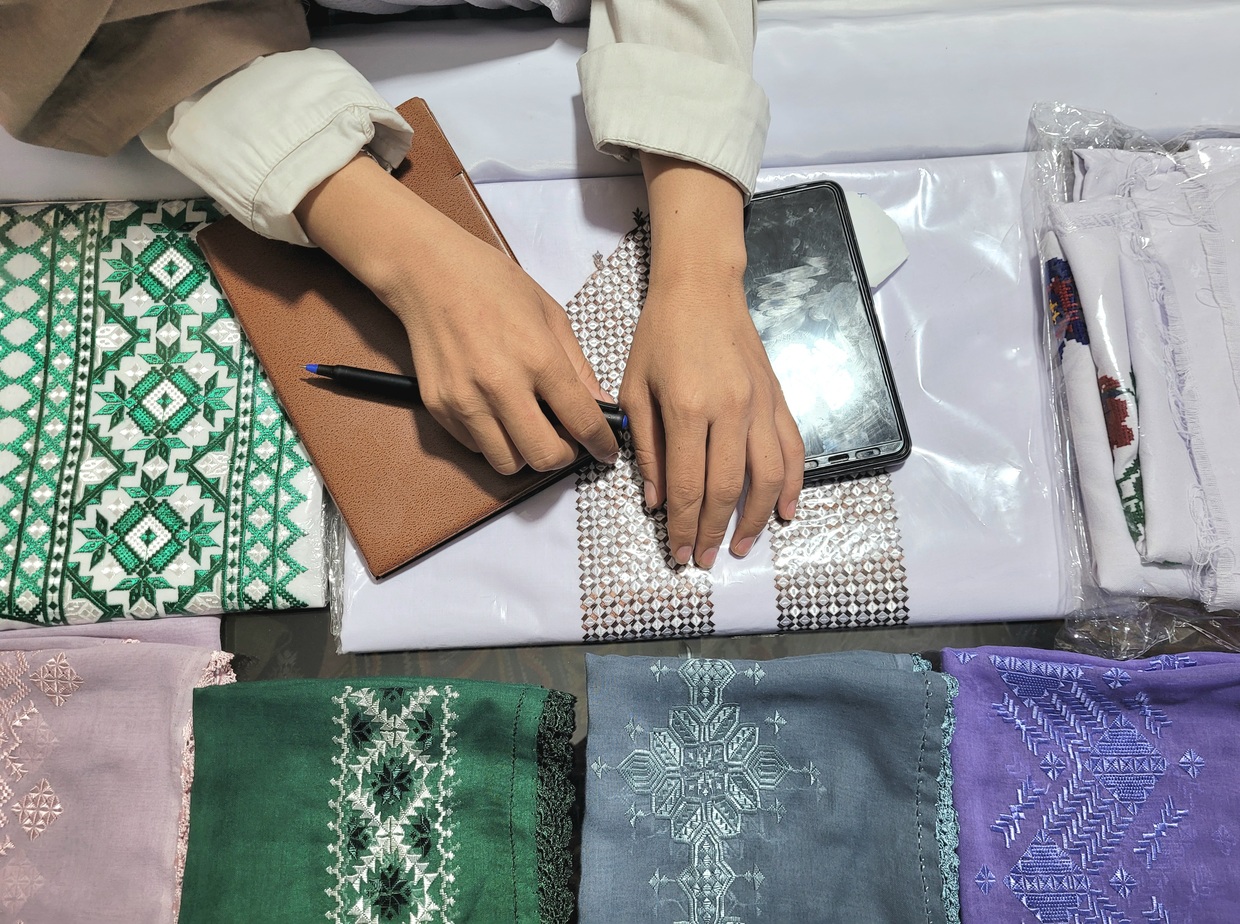
In a shopping mall in Dashte-Barchi - an area in western Kabul populated mostly by Hazaras - women-run shops take up an entire floor. They sell handmade ethnic dresses and jewelry, both in high demand during the wedding season.
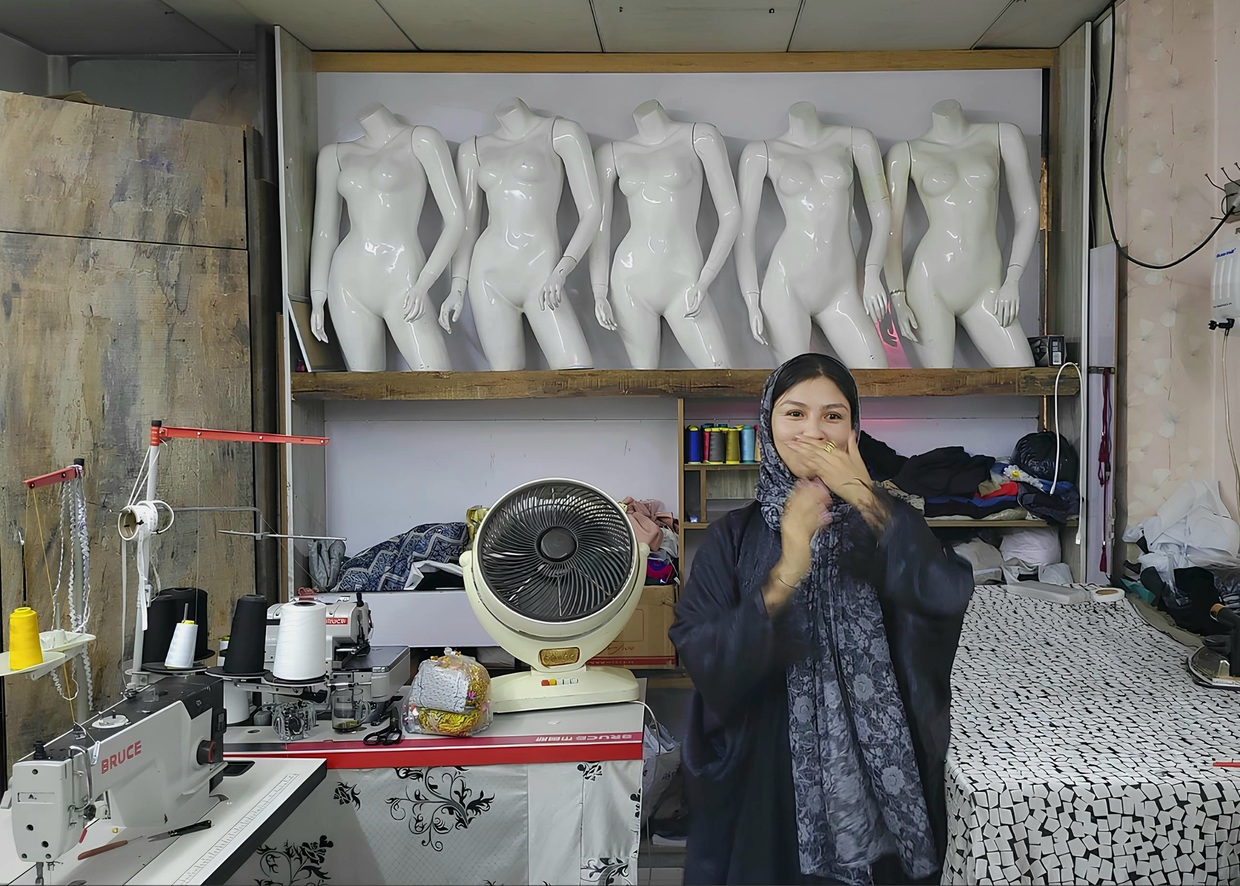
None of the women behind the counters dreamed of doing this. Seema, now touching the intricate beadwork on a green velvet gown, used to work for an NGO in Bamyan. Sakeena studied civil engineering at Kabul Polytechnic University and later ran a semi-underground literacy course. Farah had an office job, but she always enjoyed sewing - a skill that turned out to be her lifeline.
Her small shop radiates cheerful energy: pink floral wallpaper, mannequins, shiny dresses made of synthetic silk - and the best income in this section of the mall (which seems to confirm Nargees's theory about customers). Farah wears wine-colored lipstick. Her smiling assistants happily pose for a picture.
All of them once lost their aspirations, their daily routines, and their peace of mind - and then rebuilt their lives from scratch.
Needa, the owner of a beauty parlor in central Kabul, has nearly lost her business more than once. While the majority of trades - from cooking to jewelry making - remain socially and culturally acceptable, the beauty industry is going through upheaval. A mural on the wall of the Ministry of Vice and Virtue roughly translates to: "If a Muslim woman understands her inner value, she doesn't decorate herself." Beauty salons are often visited by the religious police.
"The first time they came and warned us, we didn't take it seriously," recalls Needa, a lively 28-year-old with perfect winged eyeliner. "Then they put a lock on the gate, and I had to rent another salon. And once, we barely managed to escape through the back door. I just hope they won't find us here."
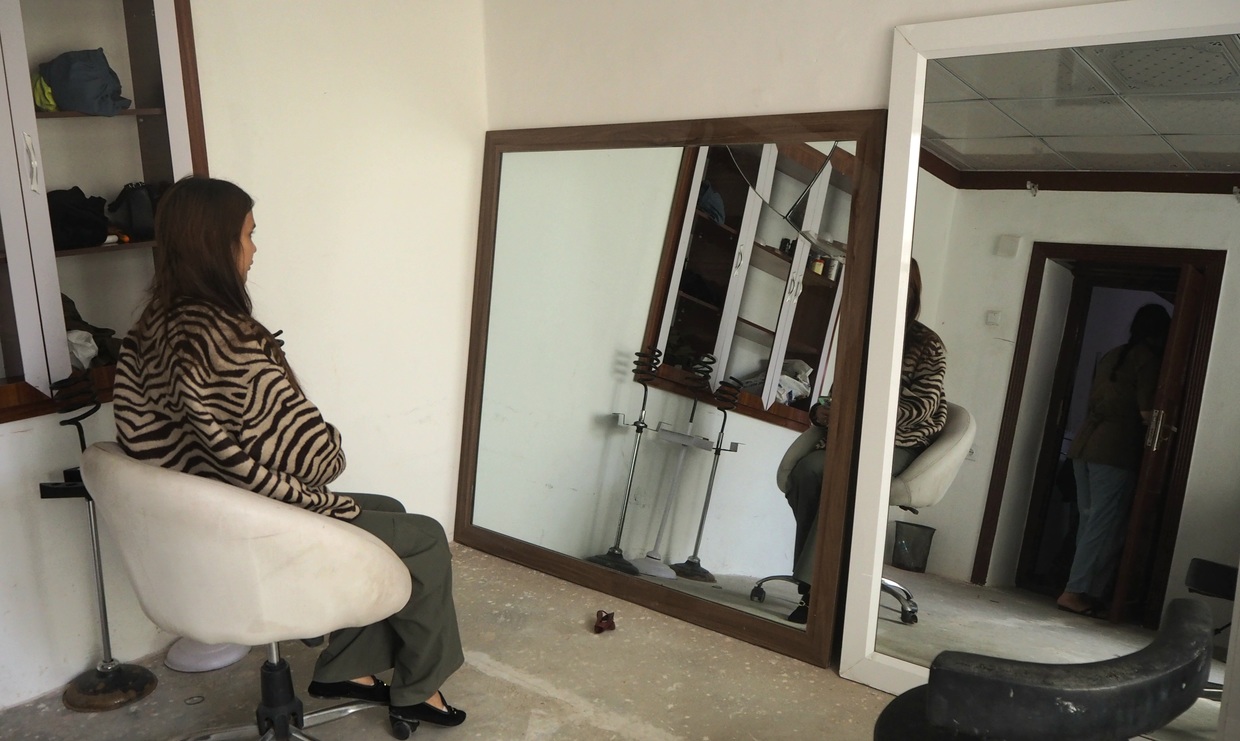
The place isn't easy to find - Afghan addresses rarely are. The salon's Instagram page simply says, "Behind the school, first street to the left." But if a foreigner like me can figure out how to get there, so can the religious police. Needa shrugs.
"The rent is 50,000 afghanis a month - around $760. I can afford it now, thank God, but if I hide the location, I'll lose customers. So I have to take the risk."
Modern tools, traditional roots
"I'm hoping to become a successful businesswoman one day," says 20-year-old Diana Ekhlasi.
She looks like a girl from a medieval Persian miniature - fair skin, almond-shaped eyes, perfectly arched brows. We met over cappuccino and cheesecake to talk about her project.
When Afghanistan became the Islamic Emirate, Diana was in the tenth grade. She could no longer attend school, so she focused on reading books in English ('The Kite Runner' by Khaled Hosseini is her favorite), drawing (she loves Vincent van Gogh), and developing her Instagram account. Later, she started using it to sell her handmade items - tote bags and headscarves.
"I saw so many beautiful things on Pinterest but couldn't find anything like that here, so I decided to make something myself. My mother taught me embroidery," recalls Diana. "That's how I started my own brand."
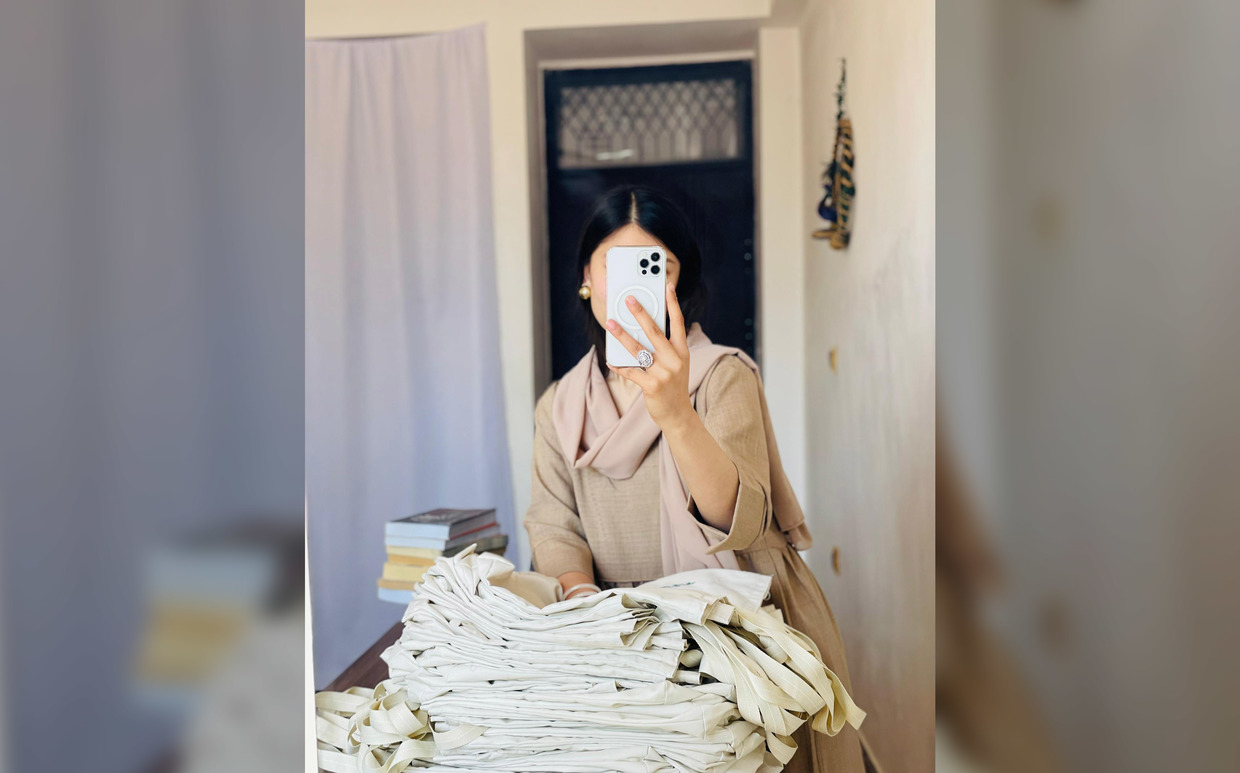
She draws inspiration from Afghanistan's rich cultural and historical heritage - Rumi's poetry, the Buddhas of Bamyan, and the Shah-Do Shamshira Mosque, one of Kabul's most iconic landmarks. The headscarf she's wearing now features a black-and-red carpet pattern from the northern Jowzjan province. Sometimes Afghan motifs meet Western art and create new stories - one design shows a Sufi dancer spinning beneath van Gogh's 'Starry Night'.
Diana tests every new idea with her Instagram followers. Whenever a design comes to mind, she makes a sample and posts a photo. Their feedback tells her whether to produce more. Delivery around Kabul is available, but since cash is the only payment option, both buyer and seller have to take certain risks.
"Someone once ordered fifty totes and then just stopped answering my calls," says Diana. "It was frustrating."
Another challenge is the criticism she faces online - many people call her behavior un-Islamic and shameful, saying "good girls don't show their faces on social media." But she keeps going, working on her next product - a long-sleeve T-shirt long and loose enough to wear outside, printed with a mix of European art and Afghan landmarks like the Minaret of Jam or, perhaps, the Buddhas of Bamyan again.
"Many people blame hard times," Diana says. "But instead of waiting for opportunities, we can create them."
 Share
Share
 Tweet
Tweet
 Share
Share
 Flip
Flip
 Email
Email
Subscribe and Follow
Get a daily dose of Chile Sun news through our daily email, its complimentary and keeps you fully up to date with world and business news as well.


News RELEASES
Publish news of your business, community or sports group, personnel appointments, major event and more by submitting a news release to Chile Sun.
More InformationRussian wines surge as imports fade under Western sanctions
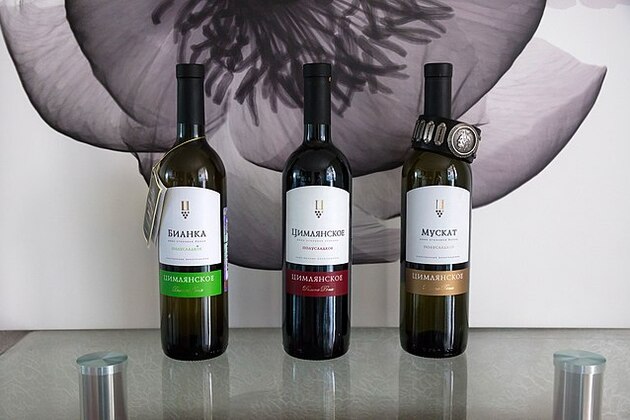
ANAPA, Russia: Russians are increasingly turning to homegrown wines as Western sanctions reshape consumer habits and limit access to...
'Stand by India, condemn all forms of terrorism': Swiss, Argentine envoys on Delhi Blast
New Delhi [India], November 13 (ANI): The Ambassadors of Switzerland and Argentina expressed condolences and said that they stand with...
Venezuela puts military on high alert in response to US buildup in Caribbean

Caracas has ordered a massive deployment of troops following the arrival of the American naval armada to the region ...
Orlando City sign M Wilder Cartagena to new contract

(Photo credit: Kim Klement Neitzel-Imagn Images) Orlando City signed midfielder Wilder Cartagena to a new contract Wednesday through...
"Feeling strong": New Zealand's Glenn Phillips cautious about international return
New Delhi [India], November 12 (ANI): New Zealand all-rounder Glenn Phillips is feeling 'strong' and has resumed training, but remains...
Deaflympics 2025: Shuttler Jerlin Jayaratchagan to be India's flag bearer in Tokyo
New Delhi [India], November 12 (ANI): Jerlin Jayaratchagan, who has won three gold medals at the Deaflympics, will be India's flagbearer...
4.6 magnitude earthquake strikes Afghanistan
Kabul [Afghanistan], November 13 (ANI): An earthquake of magnitude 4.6 struck Afghanistan in the early hours of Thursday as reported...
Daily World Briefing, Nov. 13
Iraqi PM's coalition leads in parliamentary elections, preliminary results show Preliminary results announced by Iraq's electoral...
EAM Jaishankar meets EU VP Kaja Kallas, discusses deepening strategic partnership
Niagara [Canada], November 13 (ANI): External Affairs Minister S Jaishankar met the European Commission Vice President Kaja Kallas...
EAM Jaishankar meets Saudi, Ukrainian counterparts on sidelines of G7 Foreign Ministers' Meeting
Niagara [Canada], November 13 (ANI): External Affairs Minister S. Jaishankar met the Foreign Ministers of Saudi Arabia and Ukraine...
Newly released Epstein email claims Trump knew about the girls
The US House Oversight Committee has published roughly 20,000 pages of documents from the sex offenders estate US Democrats have...
"President deeply concerned by purposeful, dishonest editing", says WH Press Sec Leavitt amid BBC row
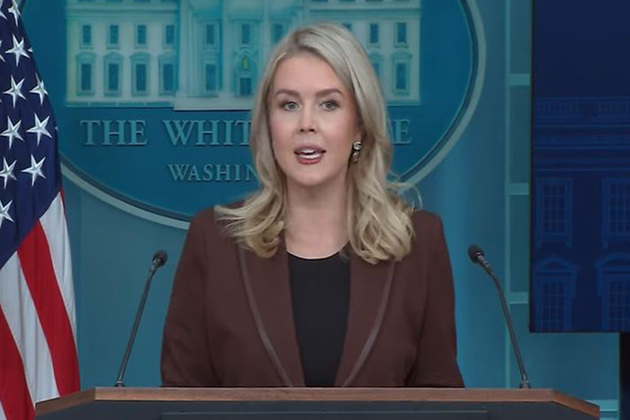
Washington, DC [US], November 13 (ANI): White House Press Secretary Karoline Leavitt on Wednesday (US local time) said that President...
