ANI
12 Feb 2026, 09:29 GMT+10
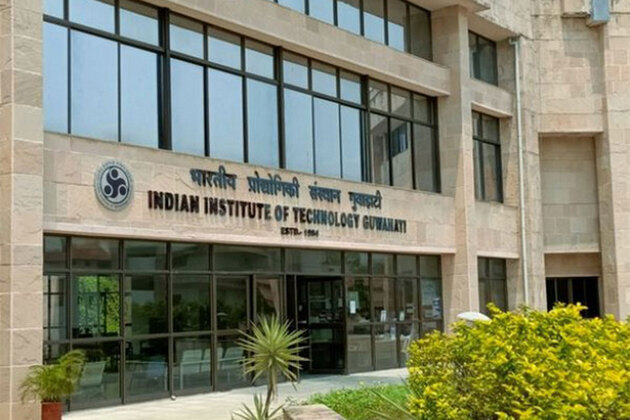
Guwahati (Assam) [India], February 12 (ANI): The Indian Institute of Technology Guwahati researchers have developed a new system that can effectively remove 99% arsenic from contaminated water at a low cost. The electrocoagulation system has demonstrated the ability to remove contaminants within a few minutes, making it suitable for use in regions with limited access to complex water treatment infrastructure.
Due to rapid industrialisation and urban growth, global reliance on groundwater has increased significantly. In many regions, groundwater contains arsenic released from natural rock formations or human activities such as mining and agriculture.
In a press release, IIT Guwahati stated that Long-term exposure can cause serious health problems, including organ damage and cancer.
'Around 140 million people globally are exposed to unsafe arsenic levels, with India, Bangladesh, and parts of South America among the worst affected. To address this, many conventional methods have been developed, and while some have been successful, these are difficult to implement in uncontrolled environments. Most methods rely on the addition of chemicals, extensive treatment periods, and sophisticated equipment. Moreover, the methods need to be performed on site and have the potential to create surplus sludge, increasing the time and energy costs to disposal,' said in the press release.
It also stated that, electrocoagulation offers a different approach. Instead of adding external chemicals, it uses an electric current to release metal ions from electrodes immersed in the water.
'These ions attach to arsenic and other contaminants, allowing them to clump together and be removed from the water through settling or flotation. The process is relatively simple to operate and reduces the need for chemical handling. Traditional electrocoagulation systems use stationary electrodes, which can slow the process and cause deposits to form on the electrode surface over time, reducing efficiency. To overcome many of the noted system inefficiencies, the IIT Guwahati team, under the guidance of Prof. Mihir Purkait, Professor, Department of Chemical Engineering, IIT Guwahati, configured an electrocoagulation system with a rotating anode and a stationary cathode,' said in the press statement.
Speaking on the application of the technology for arsenic mitigation, Prof. Mihir K. Purkait from the Department of Chemical Engineering, IIT Guwahati said, 'Electrocoagulation, combined with a rotating electrode system, offers an efficient solution for arsenic-contaminated water. In this process, a controlled electric current dissolves a sacrificial iron electrode while its rotation enhances mixing and mass transfer, leading to uniform generation of iron coagulant species that effectively bind arsenic present in the water.'
Simultaneously, fine gas bubbles formed during the process attach to the arsenic-laden flocs and lift them to the surface for easy separation.
According to Prof. Purkait, the use of rotating iron electrodes significantly improves removal efficiency while maintaining low operational cost, making the technology well-suited for arsenic removal under optimised conditions.
Laboratory tests using both synthetic water and real groundwater samples showed that the system could treat 1 m3 of contaminated water using only approximately 0.36 units of electricity. At prevailing electricity tariffs, this translates to a treatment cost of roughly Rs. 8-9 per 1,000 litres. Under optimised conditions, arsenic concentrations were reduced to well below the World Health Organisation's guideline of 10 micrograms per litre within two to three minutes.
The rotating anode system also produced significantly less sludge than conventional electrocoagulation setups, with faster settling and easier handling.
The EC technology is a cost-effective alternative to conventional membrane and adsorption systems, particularly for arsenic removal.
For a small community-scale plant (10-50 kilolitres per day), an EC system typically costs Rs. 8-15 lakh, while a conventional system costs between Rs. 12-20 lakh.
At medium-scale capacities (100-500 kilolitres per day), the EC system costs Rs. 30-80 lakh, whereas RO-based systems often exceed Rs. 1-2 crore.
Operationally, the EC system does not require expensive membranes or frequent chemical dosing, and maintenance is largely limited to electrode replacement. In contrast, membrane systems include high operating costs due to membrane fouling, replacement, and energy-intensive operations.
The developed technology is particularly suitable for rural and semi-urban areas, where affordability, robustness, and ease of operation are critical.
The findings of this study have been published in the prestigious Separation and Purification Technology Journal in a paper co-authored by Prof. Mihir Kumar Purkait and his research scholar Mukesh Bharti. As the next step, the team plans to test the developed system in real-field conditions and evaluate its long-term performance in groundwater containing multiple contaminants such as fluoride and iron.
The research team is in discussion with M/S Kakati Engineering Pvt. Ltd., Sivasagar, Assam, for the fabrication and installation of the system. Further commercialisation of the developed technology will be initiated once an appropriate funding source is confirmed. (ANI)
Get a daily dose of Chile Sun news through our daily email, its complimentary and keeps you fully up to date with world and business news as well.
Publish news of your business, community or sports group, personnel appointments, major event and more by submitting a news release to Chile Sun.
More Information(Photo credit: Mike Frey-Imagn Images) Top-seeded Taylor Fritz and Sebastian Korda both won all-U.S. matchups on Wednesday, putting...
Guwahati (Assam) [India], February 12 (ANI): The Indian Institute of Technology Guwahati researchers have developed a new system that...
New Delhi [India], February 12 (ANI): All India Majlis-e-Ittehadul Muslimeen (AIMIM) chief and MP Asaduddin Owaisi criticised the US...
(260211) -- CARACAS, Feb. 11, 2026 (Xinhua) -- Venezuela's acting president Delcy Rodriguez (R) meets with U.S. Energy Secretary Chris...
(260211) -- LIVIGNO, Feb. 11, 2026 (Xinhua) -- Ren Chongshuo of China has a training before the men's snowboard halfpipe qualification...
West Jerusalem has reportedly received its first shipment from the South American country since the US imposed a blockade ...
Islamabad [Pakistan], February 12 (ANI): Pakistan's agriculture sector continues to drift from one preventable crisis to another as...
Washington has pulled out troops from the Al-Tanf garrison after improving ties with the new government, according to the outlet ...
New Delhi has not confirmed US claims that it will stop buying Russian crude Moscow has no information about India halting purchases...
New Delhi [India], February 12 (ANI): Multiple important projects including the Rs 3.25 lakh crore 114 Rafale combat aircraft acquisition...
Former Greek President Prokopis Pavlopoulos urged civilizations to focus on dialogue and cooperation, highlighting shared values between...
The House of Representatives has voted against the US president's use of emergency powers in the trade war with Canada ...