Xinhua
18 Mar 2026, 15:45 GMT+10
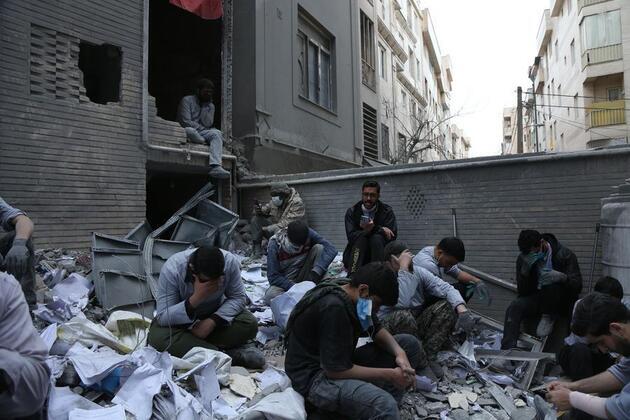
U.S. interventions in the Middle East, particularly through military actions and alliances, have escalated instability, reshaped regional balances, and failed to foster sustainable peace.
by Ahmed Sallam
When discussing the escalation currently taking place in the Middle East as a result of the U.S.-Israeli strikes on Iran, we must return to the period following the end of World War II.
At that time, Washington presented itself to the region as the "sole guarantor" of stability, the exclusive sponsor of peace processes, and the indispensable security umbrella for allied states.
However, a careful review of developments over the past three decades reveals a striking paradox: the deeper the U.S. military and political interference in the region's affairs, the greater the pace of instability, the deeper the divisions, and the more formerly stable states have been transformed into open arenas of conflict.
This paradox has become particularly evident in recent years, especially during the second term of U.S. President Donald Trump.
The Trump administration's foreign policy witnessed a noticeable shift from "maximum pressure" based on economic sanctions to the direct use of military power. The U.S.-Israeli strikes against Iran represents the clearest manifestation of this reality.
This pattern of intervention reflects a clear decline in Washington's commitment to international legal rules and raises serious questions about the future of the international order based on multilateral legitimacy, said researchers.
ARENA FOR GEOPOLITICAL COMPETITION
Throughout these years, it has become clear that the Middle East has not only been a stage for its own internal crises, but has also become a field of geopolitical competition among major countries, leaving deep impacts on the region's stability and development.
By following the chain of crises beginning with the U.S.-led invasion of Iraq in 2003, through the events known as the "Arab Spring," and to the current escalation in the Palestinian territories and the escalating conflict with Iran, it becomes evident that U.S. strategy has never truly aimed to establish sustainable stability.
Instead, it has practiced a form of "managed chaos" that ensures continued dominance and the uninterrupted flow of Washington's interests, even if the price is the fragmentation of the social and political fabric of the countries in the region.
To date, Washington has established at least 19 military bases in the Gulf under the banner of protecting regional security and ensuring the stability of global energy supplies.
Regarding the U.S.-Israeli strikes on Iran, a question arises: Were these military bases truly established to protect the Gulf states, or have they instead made those states part of a broader regional and international battlefield?
In reality, recent security developments suggest these bases have not prevented regional tensions or attacks; instead, some have become targets during periods of escalation.
As tensions between the United States and its allies on one side and Iran on the other have intensified, the risk has grown that some Gulf states may become arenas for conflicts unrelated to their national interests.
RESHAPING REGIONAL BALANCES
An increasing number of analysts believe that what the region is witnessing today is not merely a series of separate crises but rather part of a broader phase of reshaping strategic balances in the Middle East.
Successive wars, tensions among regional powers, and attempts to build new alliances or expand existing ones all indicate that the region is undergoing a geopolitical reordering that may continue for years.
However, historical experience in the Middle East shows that attempts to impose a new regional order through military force or through alliances that ignore the region's real complexities and balances often lead to the opposite results.
Sustainable security cannot be achieved through arms races or by turning states into arenas of international conflict.
Instead, it requires building a regional system based on respect for national sovereignty, adherence to international legitimacy, and addressing the root causes of historical conflicts in the region, especially the Palestinian issue.
In conclusion, U.S. interventions in the Middle East appear to have reached a dead end. Neither the people nor the countries in the region are any longer able to bear the cost of the chaos resulting from them.
The reality suggests that U.S.-led alliances have functioned less as partnerships and more as instruments of dependency, serving to protect Israeli supremacy rather than Arab sovereignty.
Restoring stability in the region requires reducing U.S. influence, strengthening national states, and building genuine regional alliances based on shared interests and mutual benefit rather than external forces.
Without such changes, the Middle East will remain trapped in a cycle of crises imposed from outside but borne by the region itself.
Editor's note: Ahmed Sallam is a former undersecretary of Egypt's State Information Service and a member of the Egyptian Council for Foreign Affairs.
The views expressed in this article are those of the author and do not necessarily reflect the positions of Xinhua News Agency.
Get a daily dose of Chile Sun news through our daily email, its complimentary and keeps you fully up to date with world and business news as well.
Publish news of your business, community or sports group, personnel appointments, major event and more by submitting a news release to Chile Sun.
More InformationLondon [UK], March 18 (ANI): Chelsea midfielder Enzo Fernandez expressed doubts regarding his future with the club following their...
Miami [USA], March 18 (ANI): Venezuela sealed their first-ever World Baseball Classic (WBC) Championship title, stunning the 2017 champions...
(Photo credit: Sam Navarro-Imagn Images) MIAMI -- Eugenio Suarez's double in the top of the ninth drove in the tiebreaking run that...
(Photo credit: Thomas Shea-Imagn Images) Team USA is a consensus 1.5-run favorite ahead of Tuesday night's World Baseball Classic...
(Photo credit: Simon Fearn-Imagn Images) Sporting Kansas City acquired Brazilian defender Diego Borges from Hungary's Zalaegerszeg...
New Delhi [India], March 17 (ANI): Brazilian star footballer Neymar has said he still hopes to earn a place in Brazil's FIFA World...
NEW YORK CITY, New York: Michael Bloomberg has again been named the biggest donor in the United States, topping the Chronicle of Philanthropy's...
US President Donald Trump (R) and Russian President Vladimir Putin attend a meeting at Joint Base Elmendorf-Richardson in Anchorage,...
Melbourne [Australia], March 18 (ANI): Former Australian captain Greg Chappell raised concerns over the decline in all-rounder Cameron...
New Delhi [India], March 18 (ANI): Former Indian Permanent Representative to the United Nations in Geneva, Dilip Sinha, has said that...
Brussels [Belgium], March 18 (ANI): European Union President Ursula von der Leyen will visit Australia from March 23-25, as per an...
U.S. interventions in the Middle East, particularly through military actions and alliances, have escalated instability, reshaped regional...